
Flat Roof Leak Repair in Houston
Flat roof leak repair Houston usually starts with seams, drains, and penetrations—not missing shingle tabs. Gulf humidity and wind-driven rain punish low-slope membranes on homes, additions, and small commercial buildings.
Stay off soft decking. Catch interior water, photograph stains, then compare leak scopes on roof leak repair in Houston and roof repair in Houston.
How flat and low-slope roofs fail
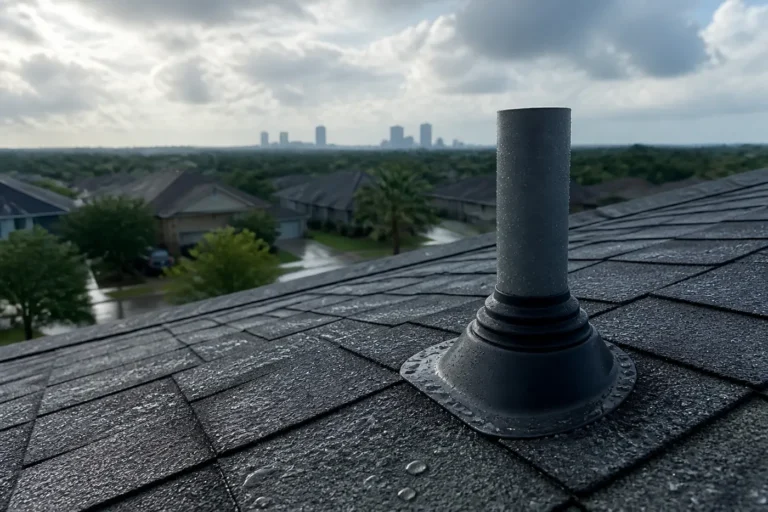
Water sits longer on flat systems. Failed seams, clogged scuppers, open pipe boots, and poorly flashed HVAC curbs are common entry paths. A stain on a first-floor ceiling may track far from the actual opening.
First-day checklist for Houston property owners
- Protect interiors under active drips.
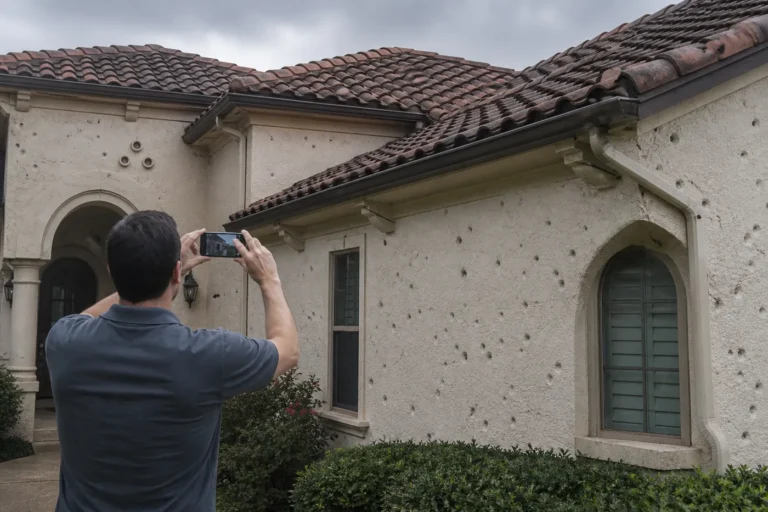
- Photograph ceiling stains and any visible exterior soft spots from a safe edge only.
- Note the last heavy rain date and whether HVAC techs were on the roof recently.
- Do not walk a spongy membrane.
- Read signs of a roof leak for interior clues, then book a low-slope inspection.
Repair scopes that should be in writing
| Scope piece | Why it matters |
|---|---|
| Leak path diagnosis | Stops patching the wrong seam |
| Temporary dry-in | Protects interiors between visits |
| Membrane or coating work | Names system and square footage |
| Drain / scupper clearing | Addresses ponding contributors |
| Penetration flashings | HVAC curbs and pipes often restart leaks |
If a quote only says ‘fix leak’ with no membrane type or penetration list, ask for more detail before you compare price.
Houston climate specifics
Tropical-season rain can drive water sideways under poorly sealed edges. Humidity keeps wet insulation wet longer. Heights, Katy, Pearland, The Woodlands, and Sugar Land buildings vary in access and parapet height—those details change labor.
Commercial and residential low-slope roofs share failure modes, but occupied offices and retail may need after-hours work and stricter interior protection.
Emergency dry-in versus lasting repair
Board-up or temporary membrane patches slow damage. They are not a multi-year system. Ask whether the temporary price is credited and who returns for permanent seams after materials arrive.
Documentation for insurance or landlord conversations
Keep dated photos, a leak log, and written scopes. We do not promise claim outcomes. Clear documentation helps you compare contractors even when no claim is filed.
- One folder for interior, drain, and curb photos.
- Save emails with scope language, not only texts.
- Ask for moisture-meter or infrared notes if offered—and treat them as planning context.
- Match local crews via the roofers in Houston hub.
When replacement enters the conversation
Repeated patches on the same seam, widespread blistering, or wet insulation across large areas may point past spot repair. That decision belongs after inspection photos—not after a single curb leak.
Practical next step
Stabilize water, gather ground-safe photos, and request written low-slope scopes that name membrane work and penetrations. Skip door-to-door today-only pitches that skip the drain and curb details.
Common mix-ups that waste repair budget
HVAC condensate and roof membrane leaks can look similar from a hallway. Attic condensation after a cold front is not the same as a curb seam failure after tropical rain. A good Houston inspection separates those stories before anyone rolls a coating over the wrong area.
Another mix-up: treating every ponding puddle as an emergency while ignoring open flashings at walls. Ask for drain findings and penetration findings in the same report.
Expert tips for low-slope owners
- Log every leak date and rain event.
- Keep HVAC service records—foot traffic often correlates with new punctures.
- Require membrane type and square footage on permanent scopes.
- Separate temporary dry-in from lasting seam or coating work on the invoice.
- Re-check interior ceilings after the next heavy Gulf rain.
Get Free Roofing Quotes
Fast response. No spam. 100% free.